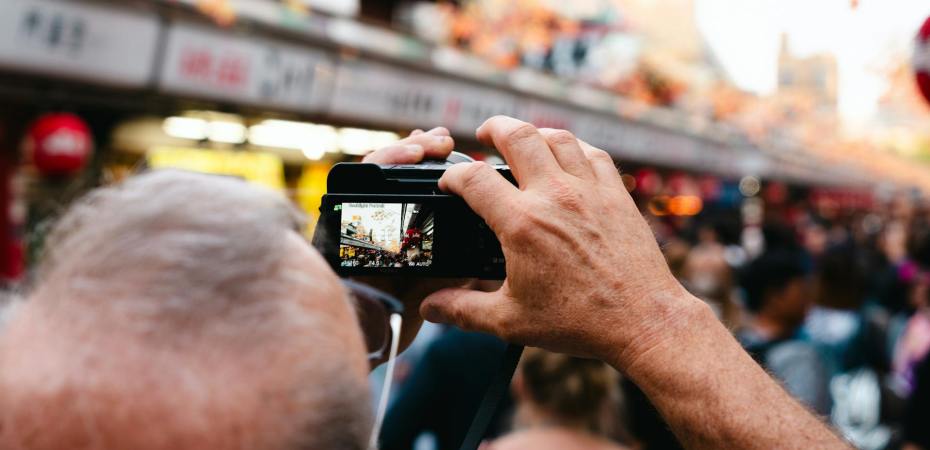
For years, social media strategy has been designed around speed, spectacle and youth. In 2026, that bias is no longer commercially or culturally defensible. The fastest-growing, most stable, and most value-aligned audience on social platforms is now the over-50 cohort—and their behaviour is quietly reshaping the ecosystem.
This is not a fringe demographic. Australians over 50 are near-universal users of Facebook, YouTube and, increasingly, Instagram. Globally, Facebook remains the daily digital town square for this age group, with roughly three-quarters using it to stay connected to family, participate in interest-based groups, and follow news that actually affects their lives. YouTube has overtaken every other platform for depth of engagement, particularly among those aged 65 and over, where it functions less like “social media” and more like a trusted knowledge utility.
The implication is simple: this audience is not browsing aimlessly as its known now, they are researching, learning, sharing and deciding.
Video is the dominant format, but not in the way most marketers assume. Over-50s overwhelmingly prefer long-form and purposeful content such as health explainers, tutorials, lived-experience stories, community updates, rather than the over rapid-fire trends. TikTok-style virality has limited traction here. Credibility, clarity and relevance outperform novelty every time. *although they love a good laugh too and TikTok does that well.
Artificial intelligence is the quiet accelerant in this shift. Around a third of over-50s were already experimenting with AI tools by 2025, particularly in health, accessibility and content discovery.
By 2026, AI is less a novelty and more invisible infrastructure: personalising feeds, improving search, supporting ageing-in-place technologies and filtering noise.
Importantly, this audience is pragmatic about AI. They expect it to assist, not replace, human judgement and storytelling.
That expectation matters. As AI-generated content floods platforms, over-50s are emerging as a quality control mechanism. They are more likely to disengage from content that feels automated, trend-chasing or emotionally manipulative. They reward transparency. They value recognisable faces. They follow creators who look like them, sound like them, and acknowledge complexity rather than smoothing it over.
Usage patterns reinforce this. Over-50s spend close to 90 minutes a day on social platforms, but their behaviour is markedly different from younger cohorts. They share more. They comment more thoughtfully. They participate in groups. They are less tolerant of performative outrage and more resistant to comparison culture. In short, they use social media as infrastructure for connection, not identity theatre.
This has structural consequences. Private and moderated spaces—particularly Facebook groups and newsletter-driven communities—are gaining strategic importance. As age-gating and safety debates intensify, platforms are quietly investing in accessibility, privacy controls and community management tools that favour older users. The centre of gravity is shifting from public feeds to trusted rooms.
For brands, media outlets and community organisations, the message is blunt: 2026 is not about chasing reach. It is about earning relevance. The over-50 audience responds to usefulness, consistency and respect. They are commercially active, socially engaged and deeply sceptical of being talked down to.
The broader lesson is cultural.
Social media is no longer a youth experiment that older people have “adopted.” It is a mature communication system being stabilised by an audience that understands time, consequence and value.
The platforms that win in 2026 will be the ones that stop optimising for noise and start designing for trust.
In that sense, social media isn’t ageing badly. It’s finally growing up.
Image by Pexels
kontakt@markuswinkler.info
Discover more from GreyMatter.StudioLife
Subscribe to get the latest posts sent to your email.
