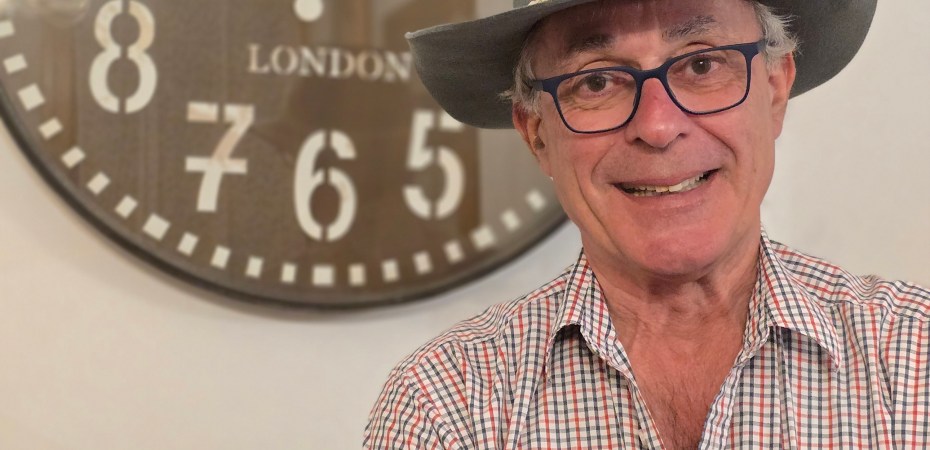
In a suburban back street, behind an unsuspecting facade, lives a regular man with an irregular hobby. He’s known as Bob, and he lives easily among letterboxes and lawns, while methodically charting historic murders as others might restore cars, brew beer or tend roses.
He isn’t researching murder for thrills though. For Bob, a murder is a paper trail, a decision tree, and a moment where society quietly showed its hand.
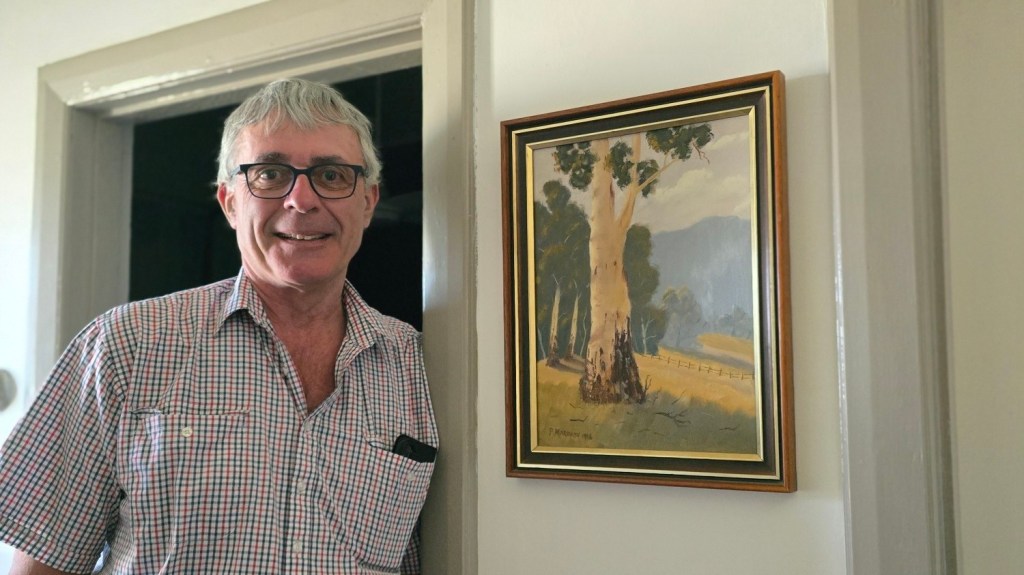
I am welcomed into Bob’s home and instantly feel safe. It’s cosy. There’s no potential for murder (not that I thought that really, but you do wonder where fascinations come from!). The house is full of books, paintings and mementos – but not in a cluttered way. In fact, the painting which draws my eye in the entrance hall, is of an Australian landscape done by his Godmother. Stunningly simple in its presentation. A joy.
We sat down to chat in the family room. It’s a hot day, so the aircon is on and the blinds are drawn. It’s comfortable and the conversation flows easily.
Bob frames his work as a long-term, research-driven hobby that began almost accidentally but evolved into a serious historical and social inquiry.
He says his initial exposure came through volunteering at the Adelaide Gaol during History Month, where public fascination with executions and murders prompted him to dig deeper – especially with the over 50’s crowd. This personal curiosity led him to State Records, where he has spent more than a decade systematically reviewing coronial and criminal files.
“I don’t talk about the gore, I talk about the facts. I talk about the history, the beliefs, the community standards at the time.”
Bob is explicit in that he does not deal in gore, ghosts, or myth-making. Instead, he interrogates the facts: what happened, why it happened, and critically what the social and legal environment allowed or encouraged at the time.
A lot of this has been written about previously (did you see his GLAM Adelaide story), but it’s interesting to explore again with the man in person – the mystery behind the voice on the radio comes to life, in real life, so to speak.
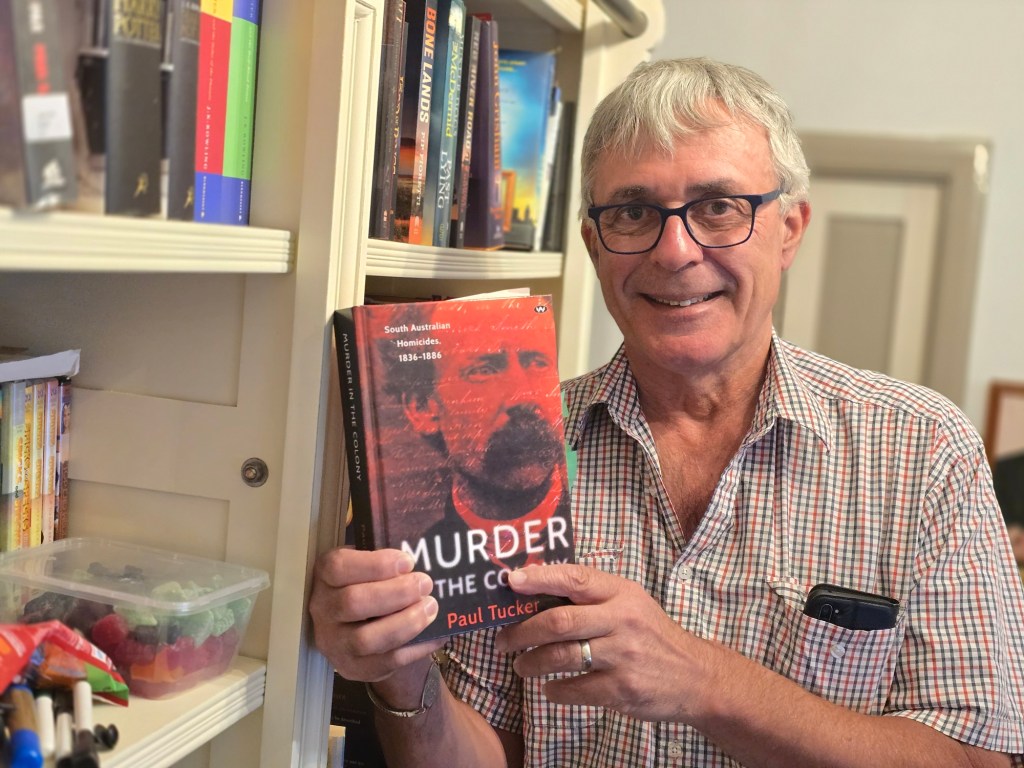
The central theme in Bob’s work is context over spectacle.
He’s running a long-form audit of society’s blind spots, using crime as the data set. His focus is not sensationalism, but identifying unusual deaths, murders, and legal anomalies that reveal how justice, morality and community standards have shifted over time.
Bob’s professional lens as a former police officer for 42 years shaped a pragmatic, evidence-first communication style. He applies the same discipline to his research and radio storytelling: concise, factual, and stripped of embellishment.
This background also informs his nuanced views on domestic violence.
“I’ve looked at over five or six hundred murders now, and at least forty percent are domestic violence related.”
Having reviewed hundreds of murders, Bob estimates that at least 40% are DV-related, and he acknowledges both improvements in police responses over time and the structural, cultural and substance-related factors that continue to drive violence. He believes progress has been made, but we both agree while chatting, elimination is unrealistic without deeper societal change.
And that‘s where we parked that conversation, as this chat was all about murders and strange deaths (not DV).

Whether examining illegal abortions in the 1940s, car-related deaths once charged as murder, or the application of the death penalty, Bob consistently positions crime as a by-product of cultural norms, gender expectations, power imbalances and outdated laws.
In Bob’s world, the killer is rarely the most interesting character.
“It’s not necessarily just the murder — it’s the angle, the quirkiness, and what was different about it.”
Bob positions his work firmly within the realm of public history, meeting a clear market demand, particularly among older audiences who are drawn to depth, context, and storytelling over shock value. This approach has led to paid walking tours, regular radio segments, and plans to expand into new formats, including lecture offerings for cruise ship audiences.
Bob’s secret sauce isn’t murder, it’s method. The crimes draw people in; the analysis keeps them listening.
With his nickname “Bob the Murder Man” gaining traction among his growing fan base, it’s evident that many people are fascinated by what drives human behaviour. While few people dwell on thoughts of murder themselves, the ways in which society understands, manages, and responds to those who do commit crimes continues to be a topic of enduring interest and conversation.
The thought from the very early South Australian settlers that we wouldn’t “commit a crime as we were too proper for that” – are long gone!
“The longer you can look back, the farther you can look forward”.
Across all platforms, his value proposition remains translating dense archival material into accessible, fact-based narratives that help people understand how Adelaide, South Australia and Australia became what it is and potentially – where we’re headed.
The murders are the hook; the real product is insight into human behaviour, institutions, and time itself.
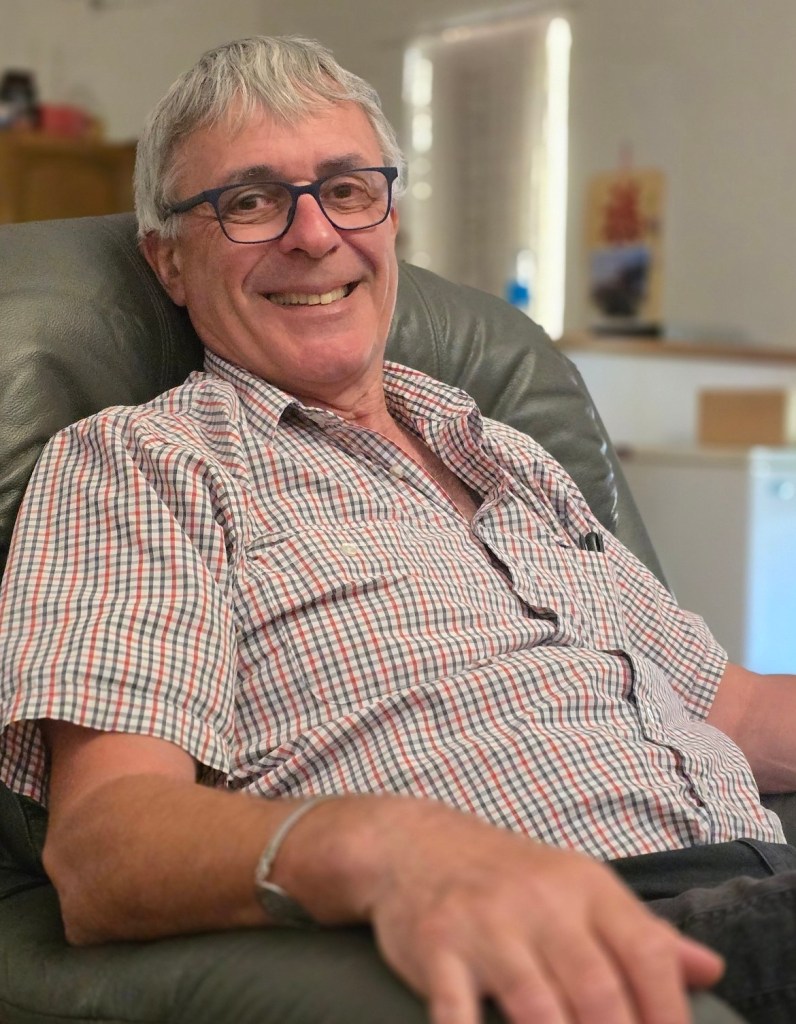
What: MURDER WALK – LIGHT TO HINDMARSH SQUARE
When: Saturday 14 February from 10am
Where: Departing from Light Square, Adelaide city
Price: $69pp
More info: https://www.wea-sa.com.au/67231A
Discover more from GreyMatter.StudioLife
Subscribe to get the latest posts sent to your email.
