
For many young Australians, obtaining a driver’s licence is a rite of passage that symbolizes independence, freedom, and the excitement of new experiences.
On the flip side, the journey to becoming a responsible driver often comes with challenges, such as learning to manage risks, developing good habits, and understanding the consequences of reckless behavior.
Road safety advocates highlight the importance of addressing the unique challenges faced by young drivers. For many, inexperience and overconfidence can be a dangerous combination. Young drivers may struggle with situational awareness, misjudge speed or distance, and be more likely to engage in risky behaviors like speeding or using their phones while driving.
Driving education programs and parental guidance play a critical role in equipping young drivers with the skills and mindset needed for safe driving. However, addressing risky behavior can be challenging, as many parents may hesitate to confront their children about unsafe habits, fearing conflict or resistance.
While many young people quickly adapt to driving responsibly, some face significant risks due to inexperience or impulsive decisions. This is particularly true when they are operating vehicles they are unfamiliar with, driving in challenging weather conditions, or navigating long distances without proper preparation.
Common challenges for young drivers include:
*Overconfidence and risk-taking behavior.
*Distracted driving, especially due to mobile phones.
*Inexperience with complex traffic scenarios.
*Peer pressure while driving with friends.
*Fatigue from late-night driving or juggling busy schedules.
There are also warning signs that a young driver may need additional supervision or education, such as:
*Frequent near misses or minor accidents.
*Multiple speeding tickets or warnings in a short period.
*Complaints from other road users or passengers about aggressive driving.
*Difficulty focusing on the road due to distractions like music, phones, or passengers.
By addressing these challenges early and promoting education, we can help ensure that young drivers develop the skills and habits needed to keep themselves and others safe on the road.
Our ‘duty of care’.
Flipping the conversation on this article
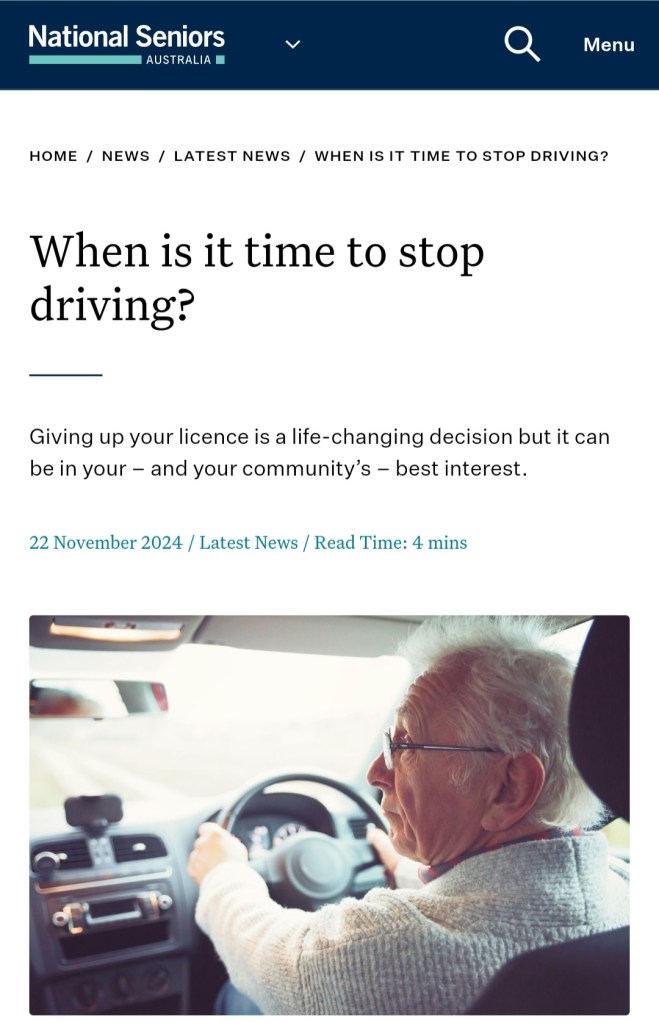
https://nationalseniors.com.au/news/latest-news/when-is-it-time-to-stop-driving
Discover more from GreyMatter.StudioLife
Subscribe to get the latest posts sent to your email.
