In a quiet shift of energy, the written storyteller’s nerves ease; as Charlie finds her breath, Helen finds her voice.
What if we cast our minds back, to imagine the future, through the eyes of storytellers from centuries past?
Take Demodocus, the blind bard from Homer’s Odyssey. What would he make of us? How would he describe our world? While this association highlights a cultural reverence for storytellers like Demodocus, it’s important to note that storytelling is not the sole domain of any one culture or condition.
Storytelling is a universal tradition that spans time, place, and ability.
Across all cultures, storytelling has been used to preserve knowledge, entertain, heal, and connect people across generations. Whether oral, written, visual, digital, or immersive, storytelling adapts to its medium evolving into podcasts, films, even data visualisations.
At its heart, though, the craft remains the same: it leans on structure, emotion, imagery, pacing, and above all, authenticity.
Which brings us to Helen.
Helen is a storyteller in the truest sense: animated, curious, deeply thoughtful, and unrelentingly driven by questions. Always scanning for the light. Always tilting toward a new idea. She calls herself the “one idea queen” and not because she has only one idea, but because she’s always ready with the next one. And then the next. Each idea arrives fully formed and full of possibility, sparking conversations, inviting others in, and setting creative fires in unexpected places; she doesn’t just say the words; she crafts the atmosphere.
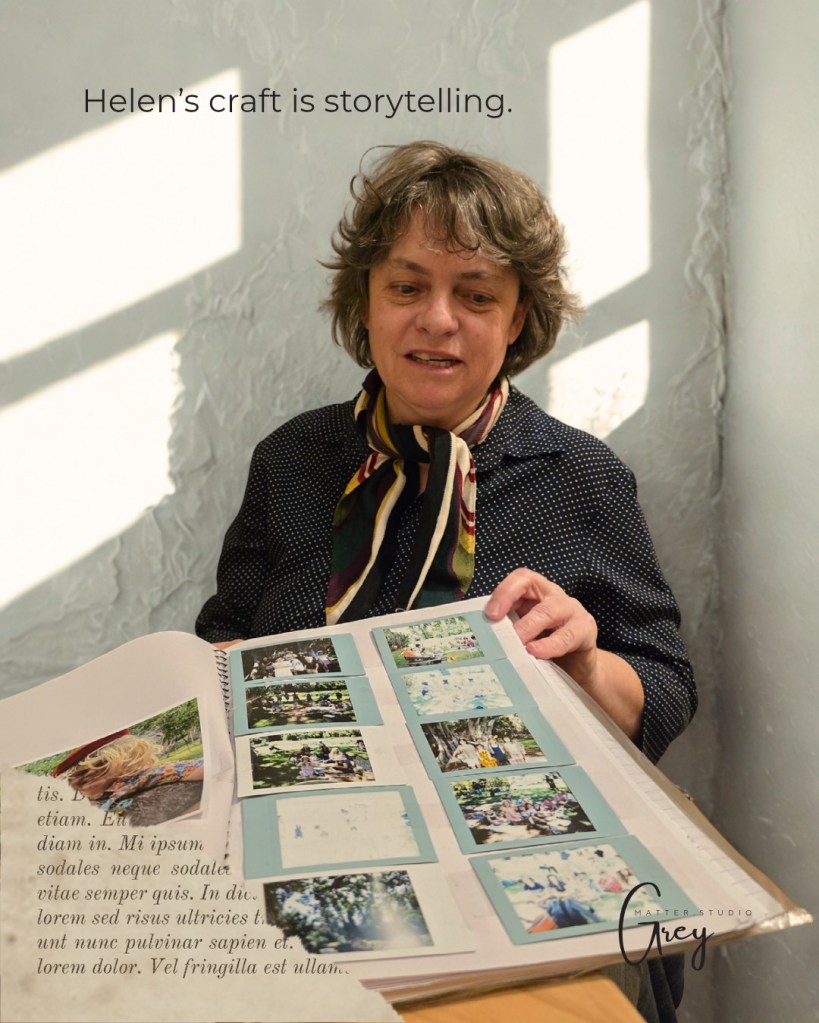
Helen is a storyteller through spoken word and interaction. Helen’s gift isn’t just the story, it’s the act of telling. The audience isn’t just listening, they are immersed.
For Helen, mental imagery doesn’t come easily. She lives with aphantasia, the inability to visualise mental images.
Aphantasia, though rarely discussed, is not a new discovery. The phenomenon of mental imagery or its absence was first formally described by Sir Francis Galton in 1880. And while research remains limited, what stands out today is not what Helen cannot visualise, but how powerfully she helps others to.
Storytelling, after all, isn’t just about seeing with the eyes. It’s about seeing with the mind and making sure others can too. What Helen can’t see internally, she more than makes up for in what she creates externally.
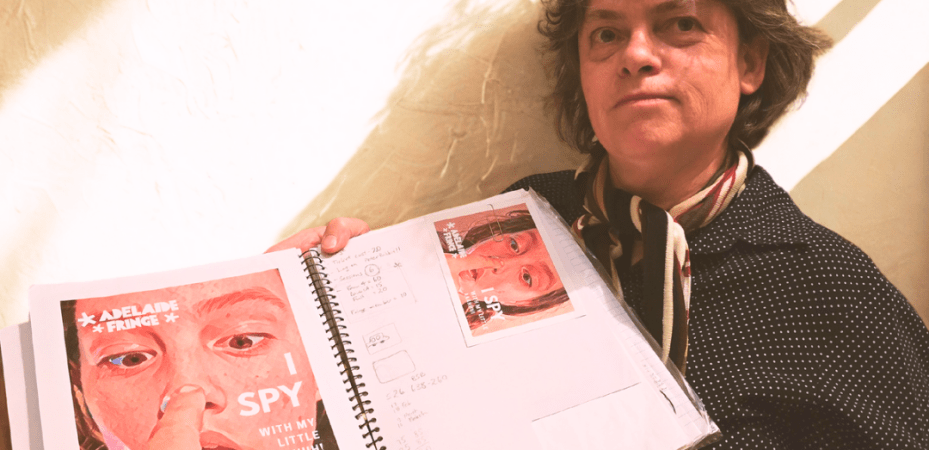
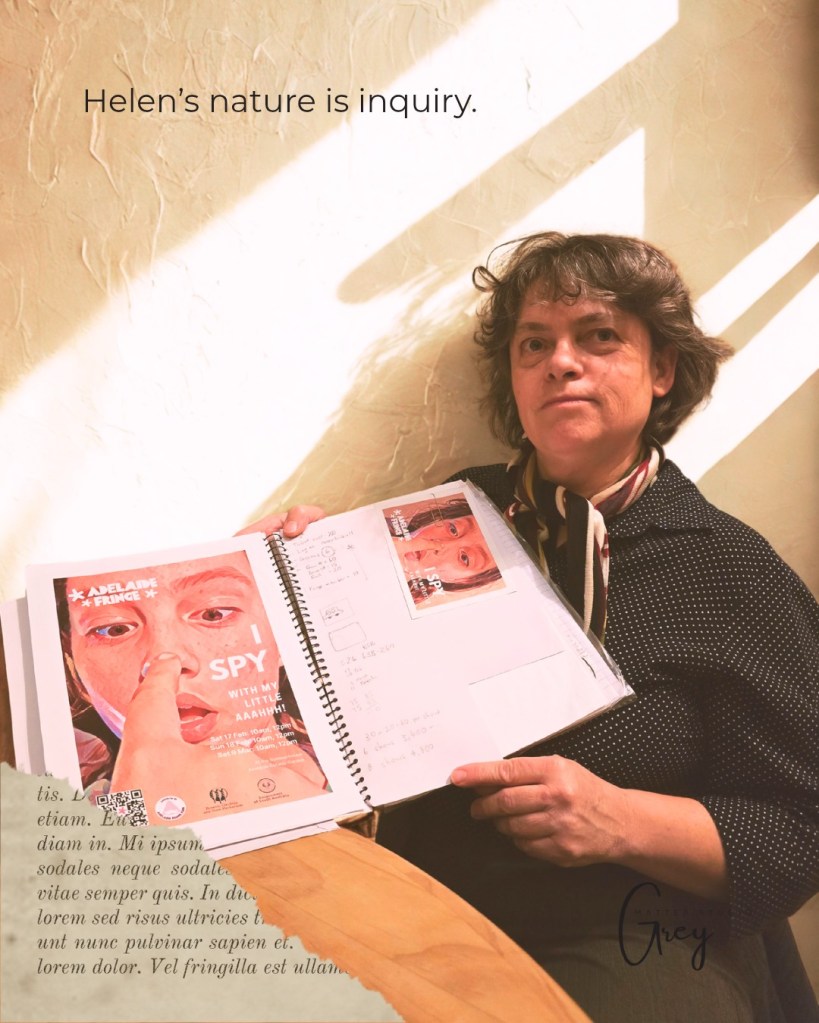
Helen uses copious notebooks, all scribbled with verses, lines, ideas and questions. She brings forth trinket boxes as props to entice the audience into the imaginary world she is painting…
The power of the story doesn’t come from pictures in our heads. It comes from connection. From resonance. From voice. From sound. As we listen to Helen, we’re reminded that stories have always found a way to be told, including hers through her craft.
At this point she grabs her bass recorder and starts playing. The sound swirls and the room is filled with another sensory layer.
We are left feeling there are many layers to Helen we have yet to discover, but that’s her beauty. She has drawn us in.
What’s next?
(to be continued…)
Reference
https://en.wikipedia.org/wiki/Demodocus_(Odyssey_character)
Discover more from GreyMatter.StudioLife
Subscribe to get the latest posts sent to your email.
