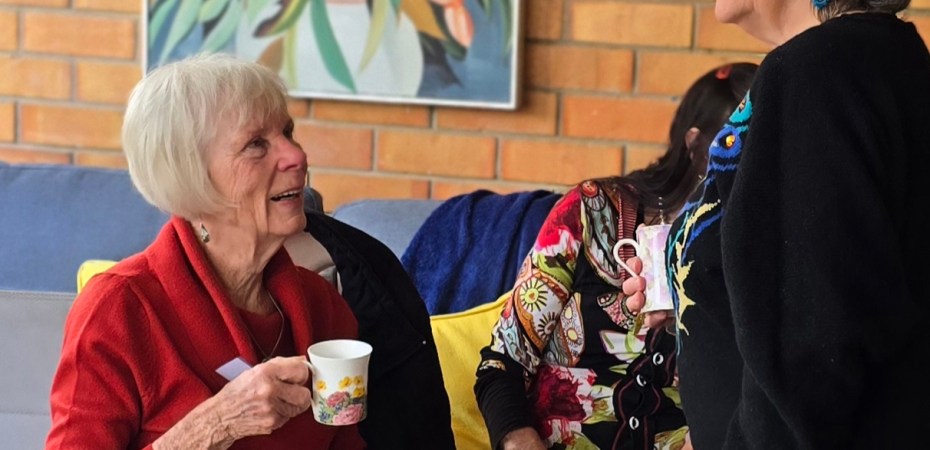
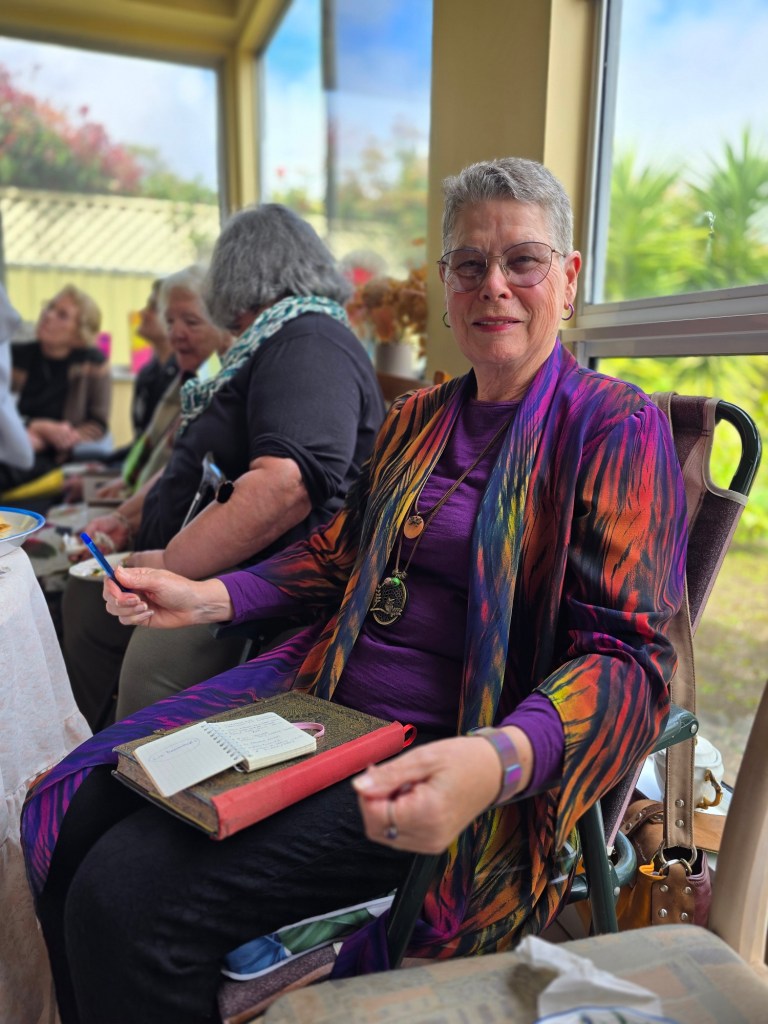
What began as a simple thread of storytelling at our convivial afternoon hosted by Jill soon unravelled into something far more textured.
The theme was fashion — but each tale quickly became less about garments and more about what they revealed: identity, memory, humour, and even rebellion. From Carmen Miranda’s bananas to Beau Brummell’s spats, from yoga pants debates to lipstick rituals before the ball, fashion became the language through which lives and eras were — and are — remembered. Even when fashionably late sneaks in.

Let’s go…
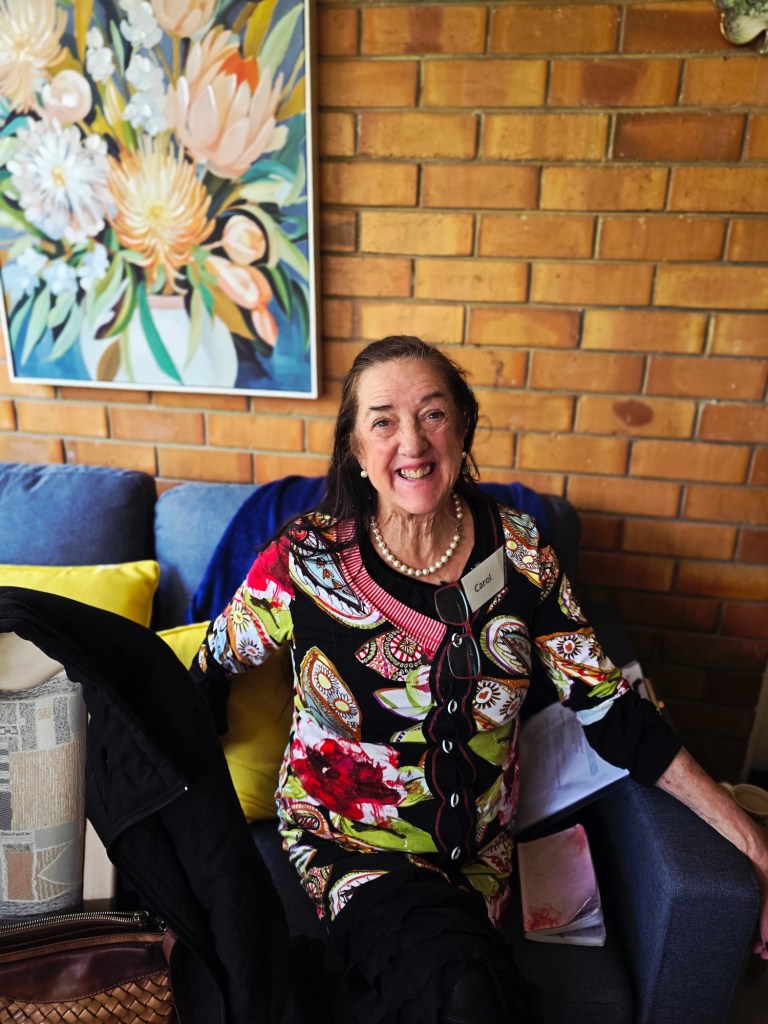
Our MC, Carol, opened with a warm and thoughtful Welcome to Country.
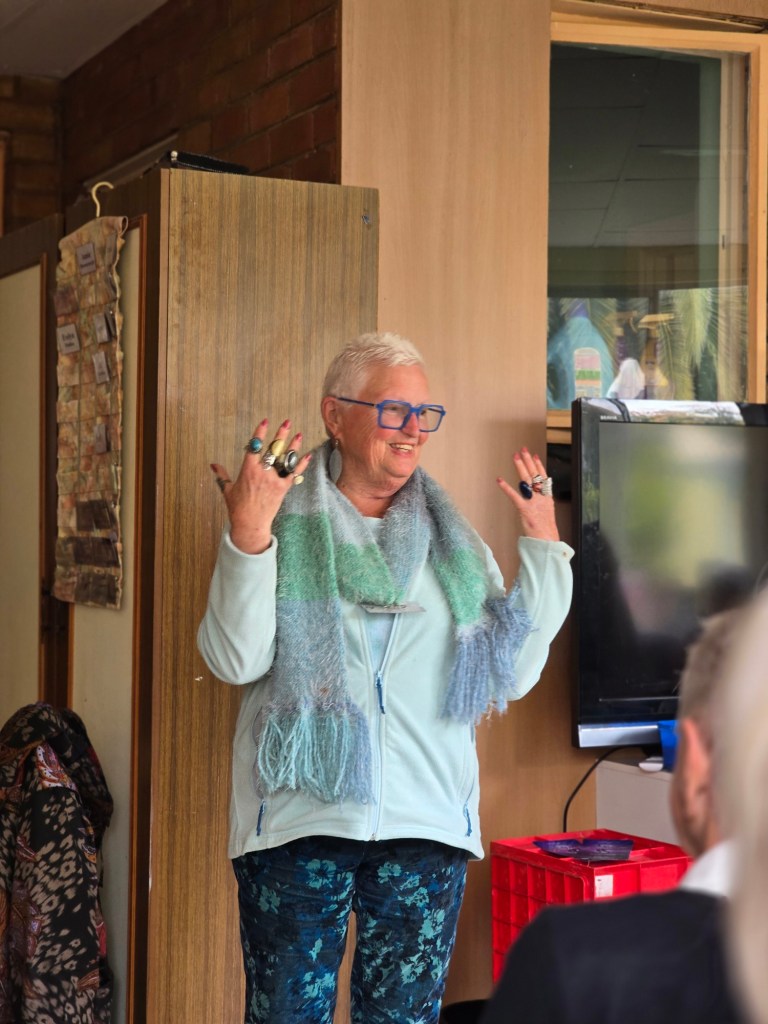
Then, she transformed into Storyteller Carol, sharing a tale of fashion classes and modelling — affordable, good-value lessons that led to a library fashion show in Mt Gambier. Dressed in pieces from New York, she didn’t take home a prize, but the Mercury Press took note, placing her in prime position.
Storyteller Sue unfolded visions of military greys and Gothic styles — clothes cold and dull on the outside, bursting with colour within. Boarding school rituals for ball preparations followed: hair styling, eyebrow shaping, lipstick trials, and even mirror kissing to test colours. Sponge-cleaned mirrors became a quiet act of rebellion.
Storyteller Jill poked fun through poem at the “ridiculous top” she bought from a certain shop — and the ageist attitudes stitched into the retail experience.
Storyteller Olga brought elegance in the form of Beau Brummell — London’s dandy whose white spats and influence lived on in verse, from T.S. Eliot’s cats to Bustopher Jones himself.
Storyteller Maggie introduced us to the bold vision of designer Liz Davenport. Starting at six years old in the 1970s with lightweight, crease-resistant flannel trousers, Davenport reimagined fashion as a life in colour — mixing, matching, and multiplying possibility.
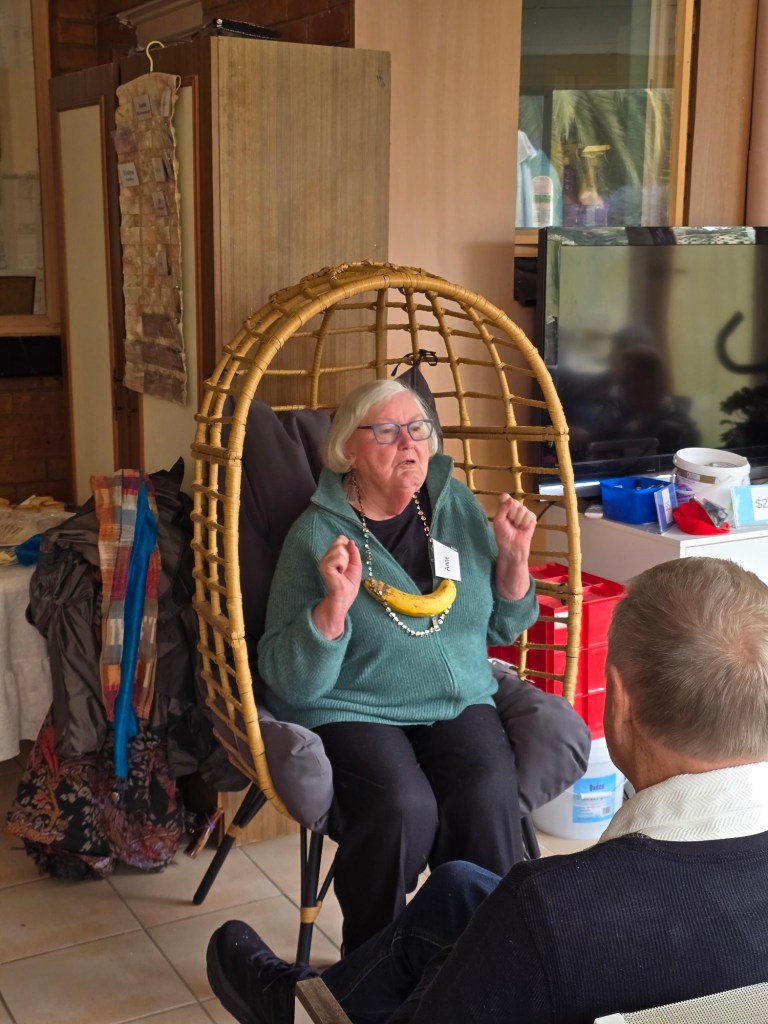
Storyteller Annie dazzled us with Carmen Miranda flair — tutti-frutti headpieces, Portugal’s rhythms, and red beads strung for a strong man. Miranda’s exuberant look, crowned with elaborate fruit hats, became a global pop culture icon, endlessly referenced and parodied in cartoons, films, and fashion alike. Her style was larger than life, as was her songbook — with the chorus of *The Lady in the Tutti Frutti Hat* playfully asking:
“I wonder why does everybody look at me
and then begin to talk about a Christmas tree? I hope that means that everyone is glad to see the lady in the tutti-frutti hat.”
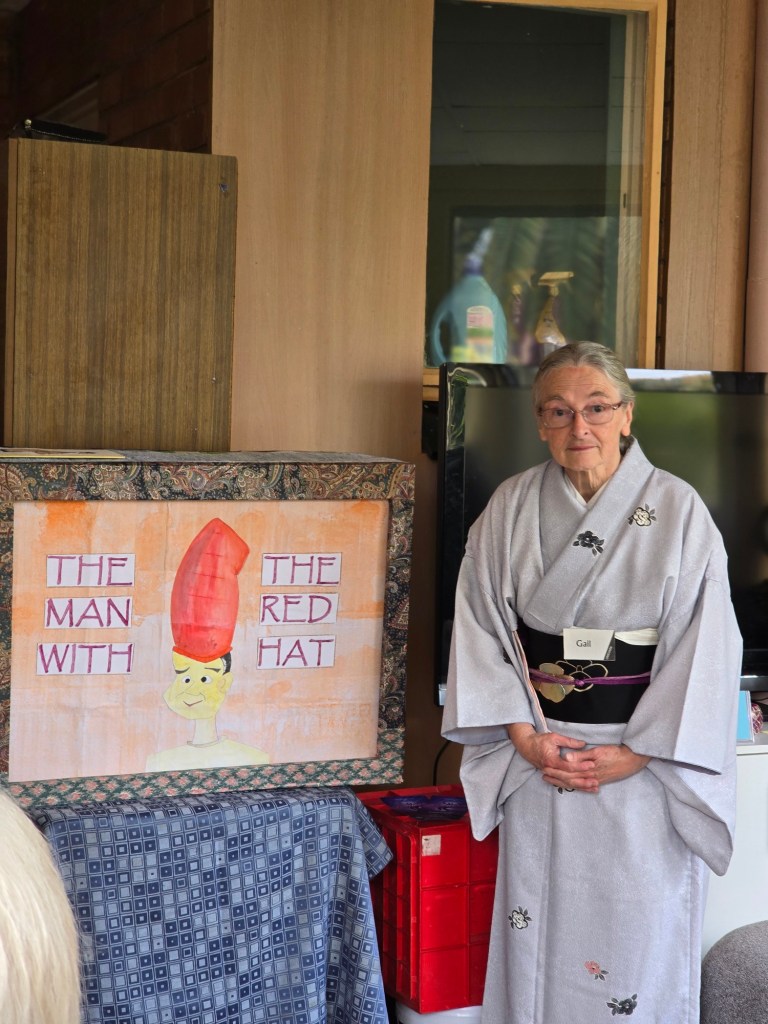
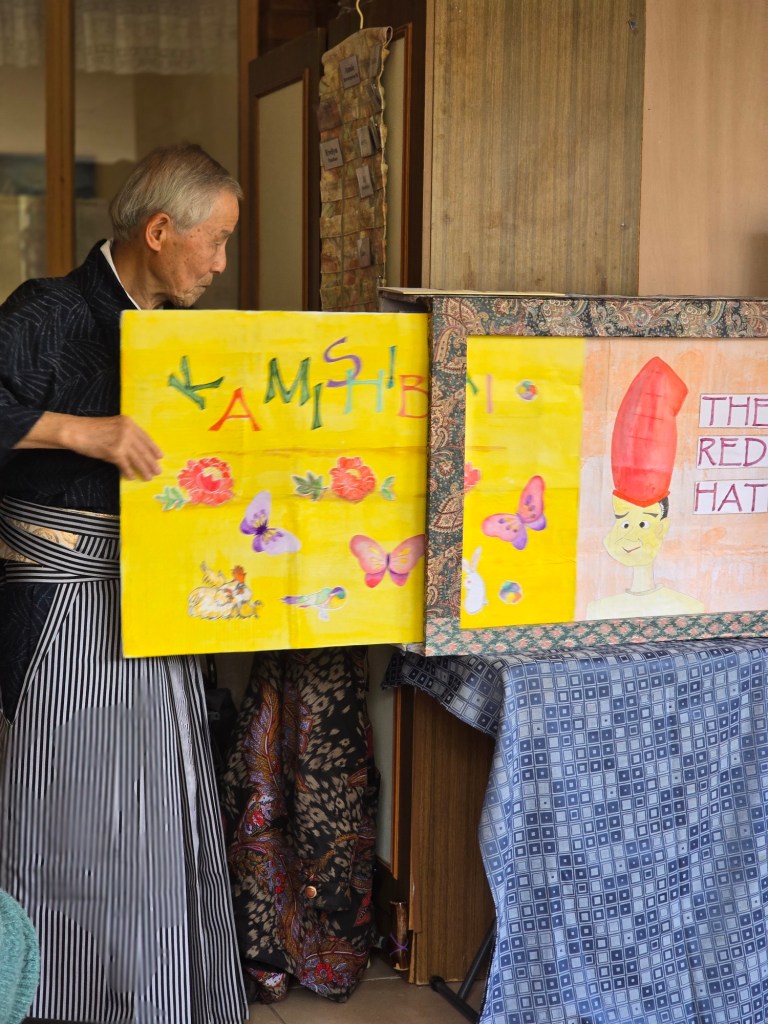
Our sessions Kamishibai — the traditional Japanese art of paper-theatre storytelling — unfolded a tale of mandated fashion under Lord Matsura, where clothing itself became a stage of culture and control. The story told of long pants that required the wearer to lift the fabric before stepping, a small but theatrical gesture that was demonstrated with playful movement, showing how even clothing dictated behaviour. It was a reminder that what we wear is never only fabric, but often a performance shaped by power, tradition, and expectation.
Storyteller Vivienne told of Nasreddin in his vineyard, mocked until he appeared in a fine coat. Suddenly invited to a banquet, he fed his garments instead of himself, declaring: “You wanted the coat, not the man.”
Storyteller Phillipa questioned the politics of yoga pants and the way women dress. Do we choose clothes for ourselves, for others, or simply to follow fashion’s rules? She recalled her youthful rebellion at the pedal sewing machine — stitching garments that defied expectations before turning to today’s stretchy staple. Yoga pants, once designed purely for the studio as close-fitting leggings to aid movement, have since spilled into everyday wardrobes, becoming a uniform for school runs, supermarkets, and even social outings. Phillipa laughed about a pair of flesh-coloured yoga pants, yet her point was simple: whether flattering or not, whether fashionable or frowned upon, the power lies in choice.
Storyteller Jill (again) returned with a tale of being fashionably late. The car wouldn’t start, school was waiting, and in the confusion, she told the school she’d called the IRA.
Storyteller Carol (in closing) brought us full circle with the memory of her final fashion show — the applause, the accolade, and the satisfaction of a story stitched to its last seam.
Each tale reminded us that style is never just fabric or form. It is cultural history, personal expression, and at times, quiet resistance.
Whether stitched into flannel trousers, modelled on a library stage, or discovered in the reflection of a sponge-wiped mirror, fashion carried meaning well beyond appearance.
As our storytellers showed, what we wear tells its own story — not just of who we are, but of the worlds we move through, and how we choose to be seen within them. And while I arrived in jeans and a tee, everyone else brought meticulous style to match their tales. Proof that fashion isn’t just what you wear — it’s the story you tell.
Next gathering: 12 October at the Guide Hall as part of the Nature Festival events.
Discover more from GreyMatter.StudioLife
Subscribe to get the latest posts sent to your email.
