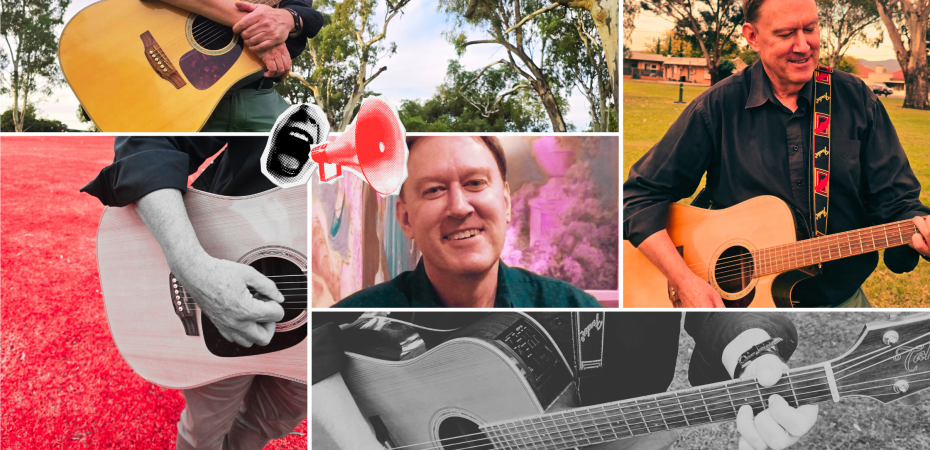
Glenn starts off with “God Gave me Gout for Eating Meat on Good Friday”.
Who doesn’t love a creative challenge like writing the longest song title you can imagine? After a short time chatting, this feels like the kind of question Glenn would toss out daily while living his dream: work, footy, passions (song writing, poetry, music/guitar, volunteering) and a life that appears free of heavy responsibilities; it’s also the sort of question that appears part of his daily routine, because of his creative mindset.
But the question remains, how do you respond to that song title? 🎵 Still Within The Sound Of My Voice.
There’s a moment in every interview where you think ‘how can I delve further or what do I ask next?’. Glenn had confessed to feeling [intimidated?!] about the interview [I prefer to assume humble] and I later find out he’s a blusher [something he hates but is an endearing character].
So, deep diving into his inner psychic on a first meeting is going to be tricky. Not everyone is an open book; this is a good thing! After starting the interview at the VAR radio station, then realising we were hungry, we go to the Hotel Royal for ‘a Mexican bowl’ meal, then chat via messages… then chatted again while recording a few songs to accompany this story because heck, why not!
Glenn is easy company, and while his stories are usually shared through song or poetry, somewhere along the way, the conversation shifted into a deeper gear.
🎵 By the Time I Get to Phoenix I’ve worked out the storyline…

Easy silence for Glenn could almost be expected due to his day job; he sits in silence frequently and must understand it intimately.
Why? As an Auslan interpreter, Glenn works in the space between voice and silence.
Through this story, I’ve tried to explain a gap in communication many people rarely notice… because communicating is never just about words; as the song title 🎵 You Might As Well Smile suggests…, it’s about tone, intention, and timing – all very human layers that make up our conversations. Without getting too communications process orientated and nerdy, we could look at the bigger meaning across verbal, nonverbal, ie polyvocal, as well as body language, eye contact, tone, and the more intangible “vibe” that would/should/can collectively shape perception, trust, and a behavioural response out of us.
The problem is that when any of these layers are filtered through a third person like an interpreter (don’t call them a translator, ha!), the richness of that communication can shift subtly. What seems like a straightforward exchange, can become a far more complex negotiation of meaning, intention, and perception.
For all the visibility and so-called knowledge about an interpreter’s role, the interaction complexity between interpreter, deaf person and the recipient is still frequently misunderstood.
“They’ll walk in and talk to me, and you have to say, just speak directly to them (pointing at the deaf person). I’ll interpret the conversation.”
In this instance the deaf person uses Auslan.
Best practice is to speak directly to the deaf person, with the interpreter facilitating equal access (rather than standing in for the conversation).
It’s a small personal behavioural correction to look at the deaf person while listening to the interpreter but it reveals a lack of education and awareness around how to support a person who doesn’t speak your own language if you don’t.
The instinct is to address the person who is talking, rather than the person the conversation is for ie the deaf person.
It’s not intentional (you’d hope) but a habit left unchallenged, becomes the norm.
Imagine the additional complexity if that person was a child, young carer or had additional challenges to cope with.
Research found on healthcare interactions with people with hearing loss, that patients often feel excluded from conversations about their care and that providers need to be trained to recognise and respond to communication needs. Good communication is essential for high quality healthcare. Ref https://journals.plos.org/plosone/article?id=10.1371%2Fjournal.pone.0308592&utm_source=perplexity
In aged care, the same dynamic appears when staff speak to family or carers instead of the older person. This is known to undermine dignity, participation and person-centred care. Systemic questioning failure is common but needn't be.
As a full time Auslan interpreter, Glenn sees how this plays out in real time for his clients, eg within hospitals, workplaces and everyday interactions.
Questions matter. In one incident, he recalls, “The doctor’s asking about operations,”, “and I know he had major surgery last year. You think – don’t you read the medical history first?” Note, it implied the medical staff member didn’t know how to speak with a deaf person.
What occurred to me after listening to Glenn, is how often this point must be overlooked. Deaf people are not passive. They are already navigating a hearing world with a level of awareness many people and organisations fail to understand; evidence of capability rather than limitation.
The barrier then sits with the other side’s receptiveness.
[for example] “They know they’re deaf,” Glenn says. “They’re not going to put themselves in dangerous situations.”
Therefore, a question we could ask ourselves is “how can we adapt our own behaviours?”
These days, along with the access to Auslan interpreters, hearing support has evolved from basic sound amplifiers to smart, connected tools and apps, increasingly positioned as part of staying connected and living well within the community. Many have also adapted their social communications, such as using video captioning, for example.
Yet even as these technological and communication advances improve access, they don’t automatically guarantee meaningful participation. Being able to hear or receive information is only one part of the picture; the deeper question is whether people are genuinely included in ways that value their presence and enable them to engage fully.
Diversity is about who is present, and inclusion is about whether everyone can belong and contribute.
So a community that includes people with different ages, cultures, languages, abilities, beliefs, identities, and life experiences, is a great community that actively makes room for people to feel welcome, respected, and able to take part.
To interpret life, Glenn writes.
His song writing process is quick and everything rhymes! They become very catchy tunes…
He says, “Sometimes I’ll just be sitting somewhere and a thought will pop into my head… and I’ll just write. It happens pretty quickly.”
For example, a conversation in a pub becomes a chorus, a passing comment becomes a song title and sometimes that song title comes first with the story building to meet it later.
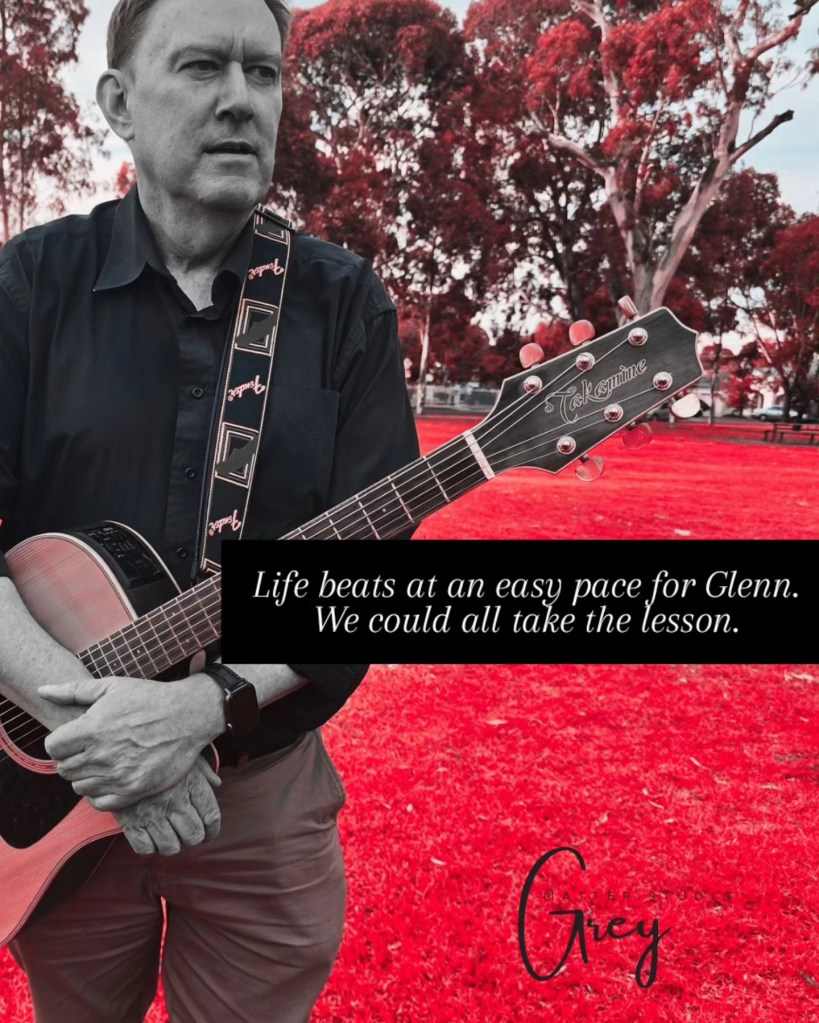
Life beats at an easy pace for Glenn.
We could all take the lesson.
If you listen to previous interviews with Glenn (Google is your friend), there are many chapters to his poetry and song writing challenges, from writing a poem a day to a song a month. I also encourage a listen to the following podcast;
14 June 2025 – Emerging Writers https://omny.fm/shows/emerging-writers/14-june-2025-emerging-writers-glenn-butcher-revisited
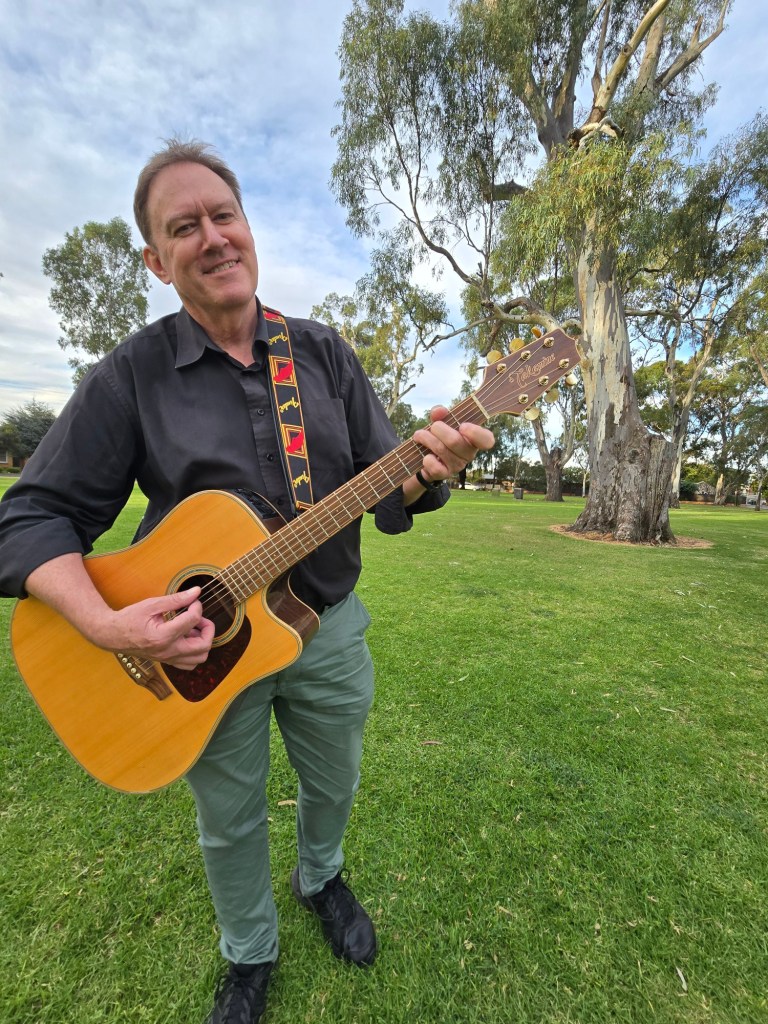
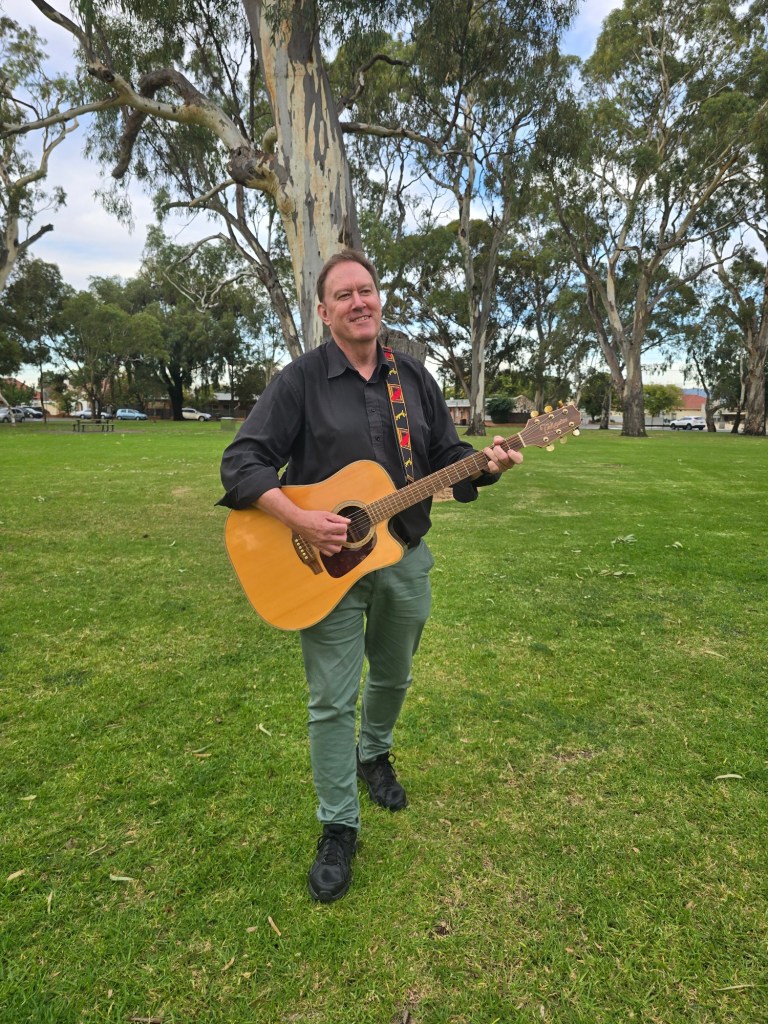

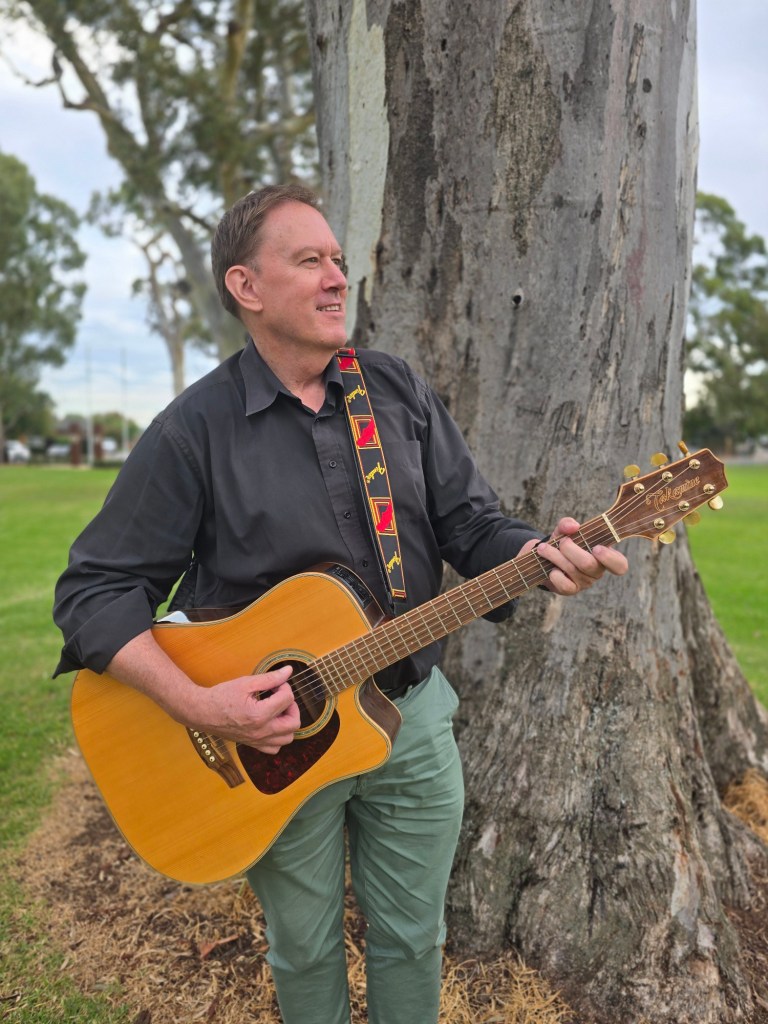
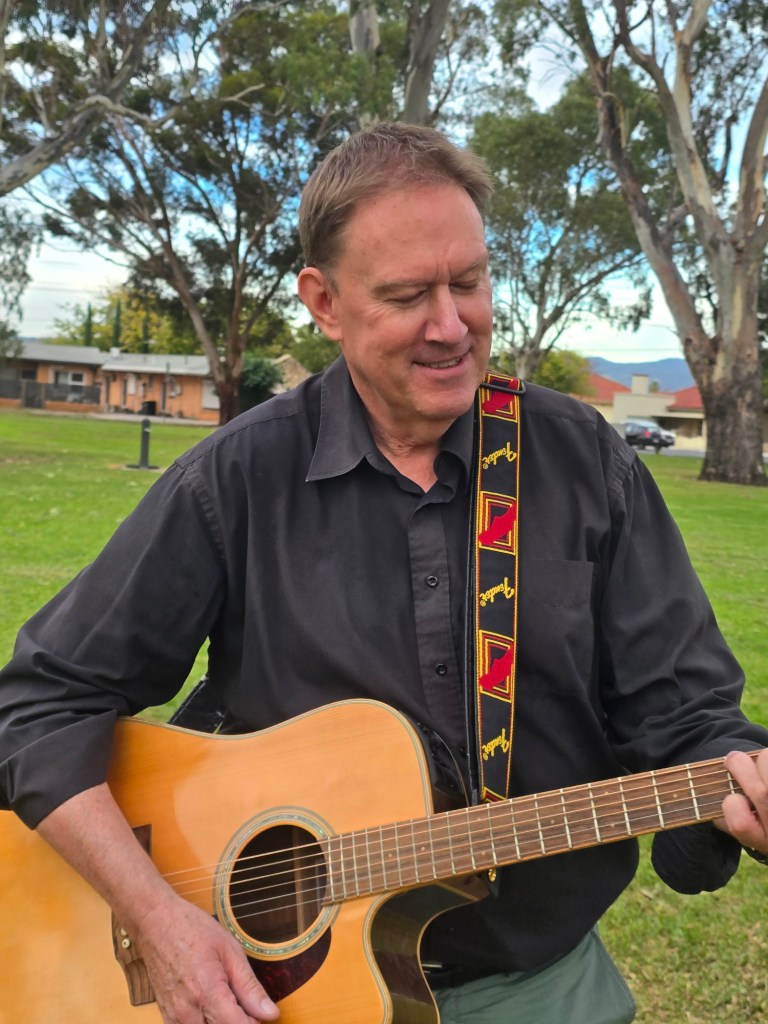
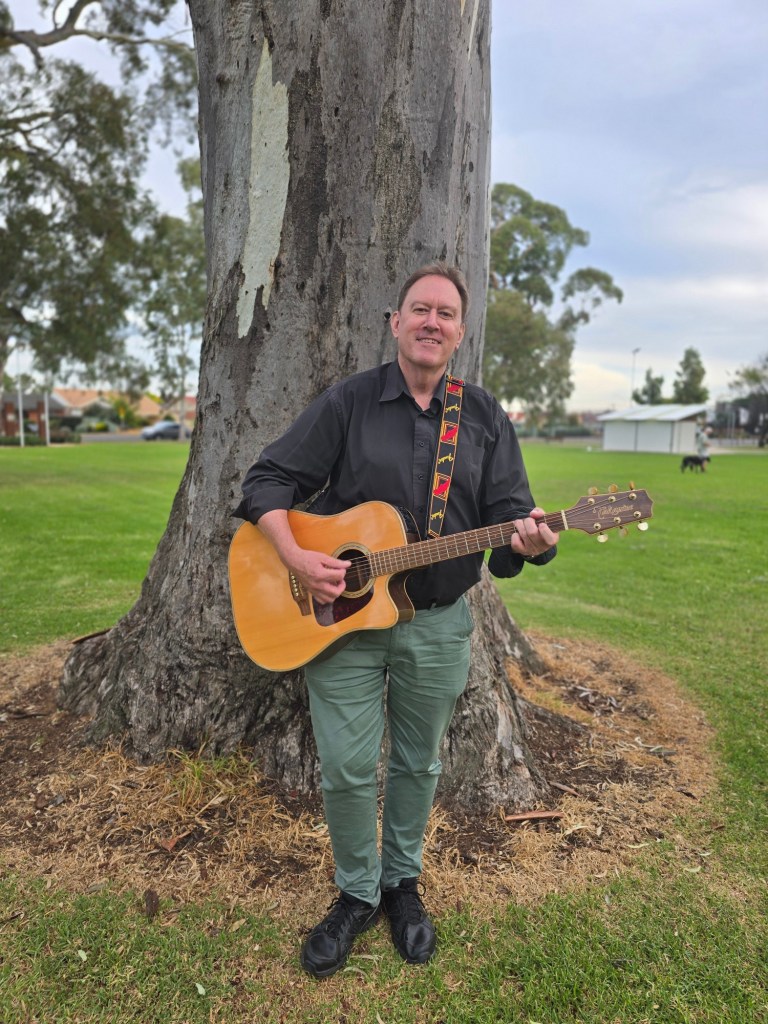
I acknowledge Glenn as a Vision Australia Radio volunteer newsreader ie for the vision impaired and this is essentially how we met. Our on-air colleague Dorothy, who I have written about previously, provided contact details. I was also known to Glenn through Fergus and Doctor D. So, Adelaide being Adelaide, and 🎵 If These Walls Could Speak, the universe aligned. What it does highlight, is just how multi dimensional and multi layered Glenn is!! Like a Sarah Lee cake!
🎵 Did you notice the song titles by Glen Campbell and Jimmy Webb? This song writing duo was chatted about during the interview process and they struck a chord… boom boom.
https://en.wikipedia.org/wiki/Glen_Campbell_and_Jimmy_Webb:_In_Session
#glennbutcher
Glen Butcher is a songwriter in Adelaide, South Australia
Discover more from GreyMatter.StudioLife
Subscribe to get the latest posts sent to your email.

[…] Interview “The Rest Is Silence” | Glenn Butcher […]
LikeLike