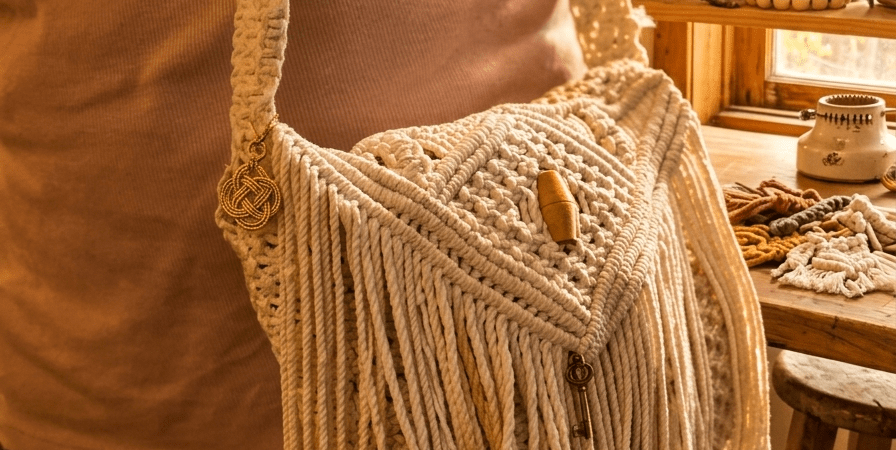
The Birth of a Bohemian Icon
Macramé handbags weren’t just accessories in the 1970s, they shouted: I choose to make things with my own hands. I choose natural fibers over factory production. I choose simplicity over excess.
The macrame craft itself is ancient, tracing its roots to Arabic weavers in the 13th century and later to Victorian parlors…. however the 1970s gave it a new life. Suddenly, macramé wasn’t about delicate doilies. It was about earth tones, fringe, and freedom!
By 1975, macramé had taken over.
The trend was everywhere. Macramé hung from ceilings holding pot plants, framed lounge room walls, wrapped around lamp shades, and swung from shoulders in the form of oversized tote bags and purses.
The magazine Apartment Therapy called it “the golden age of macramé,” and it’s hard to argue otherwise. Women (and many men) were making everything from plant hangers to wall hangings to purses and shoulder bags that became the uniform of the bohemian lifestyle.
The Materials of Rebellion
If there are any surviving 1970s macramé bags today, you’ll feel the texture of the era:
- Jute, hemp, and cotton cords in shades of beige, cream, rust, and brown, the color palette of forests and deserts
- Wooden beads carved from olive wood or bamboo, often hand-painted with geometric patterns
- Rope fringe that swayed with every step, catching sunlight like a slow-motion dance
- Simple closures: wooden toggles, leather straps, or often just the honest friction of tangled knots.
These weren’t mass-produced at factories. They were made in bedrooms, kitchens, and backyard workshops.
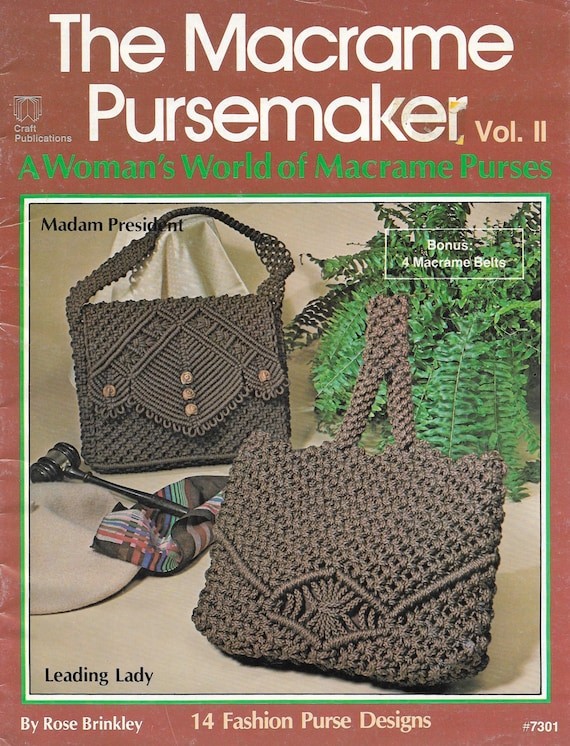
The beauty of macramé handbags was their accessibility. You didn’t need expensive equipment and you certainly didn’t need formal training. You needed cord, your hands, and three basic knots: the square knot, the spiral knot, and the gathering knot. Pattern books flooded bookstores, offering instructions for everything from mini purses to maxi bags, and young women across the country tied their first knots over coffee and friendship.
One vintage seller describes a 1970s macramé bag as having “design handbag designs” qualities , a tautology that somehow captures the era’s earnestness: these weren’t just bags. They were design statements.
The Quiet Disappearance
By 1981, the trend had vanished almost overnight. The synthetic fabrics of the 1980s —neon spandex, leather jackets, oversized shoulder pads had no room for the understated earthiness of macramé. The hand-knotted bags were donated to thrift stores, buried in closets, or abandoned at garage sales for fifty cents.
“For a while, macramé felt like a dirty word,” one vintage collector recalled. “It was so deeply associated with the 1970s that when the decade ended, everything 70s went out of style including the craft itself.”
The Return of the Knot
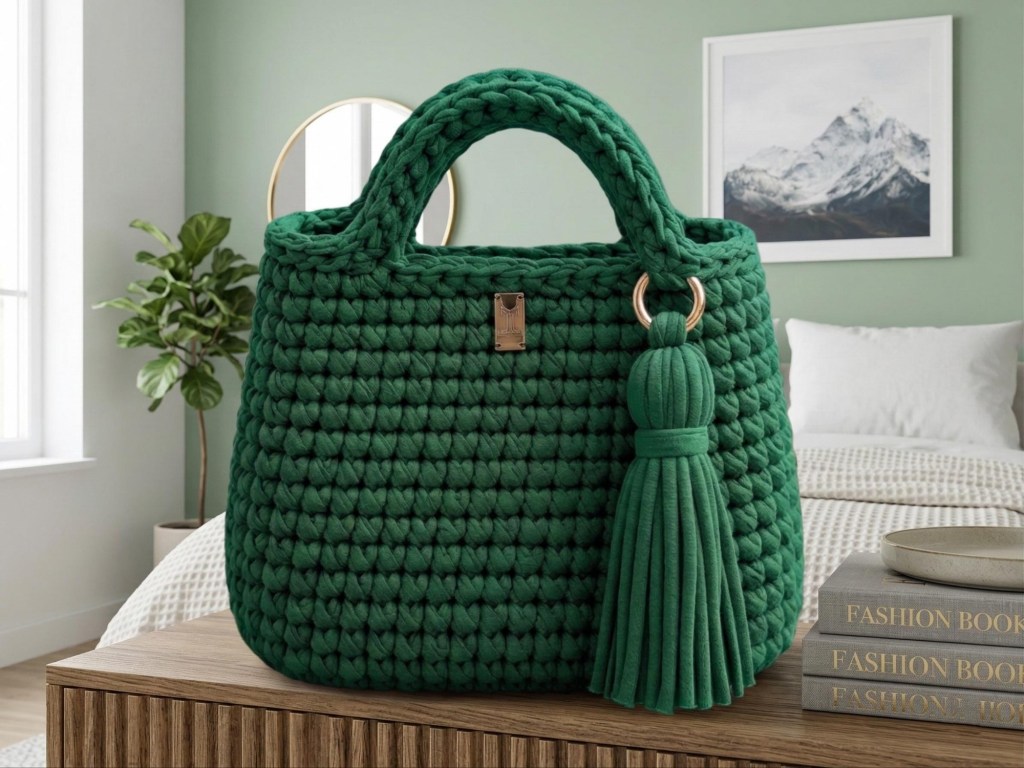
Macramé plant hangers, wall art, and even handbags are back in fashion, but the modern versions often lack the raw authenticity of the originals. The vintage pieces still carry the imperfections of human hands. There are the slightly uneven knots, the faded cord from decades of sun exposure, and the wooden bead that still clicks when you walk.
Today, an original macrame handbag might sell for $80–$150 on Etsy, tagged as “vintage macramé handbag handmade tote.” It’s no longer that rebellion. It’s boho-chic nostalgia, reimagined by a new generation!! A new macrame ‘styled‘ bag can fetch triple those $.
The macramé handbag of the 1970s was more than an accessory. It was a symbol of a generation’s values: sustainability before it had a name, DIY before it had a hashtag, and the quiet belief that making something with your own hands could change the world.
When you hold a 1970s macramé bag today, you’re not just holding a bag; you’re holding the tactile memory of an era that believed in the power of knots, cord, and the people who tied them together.
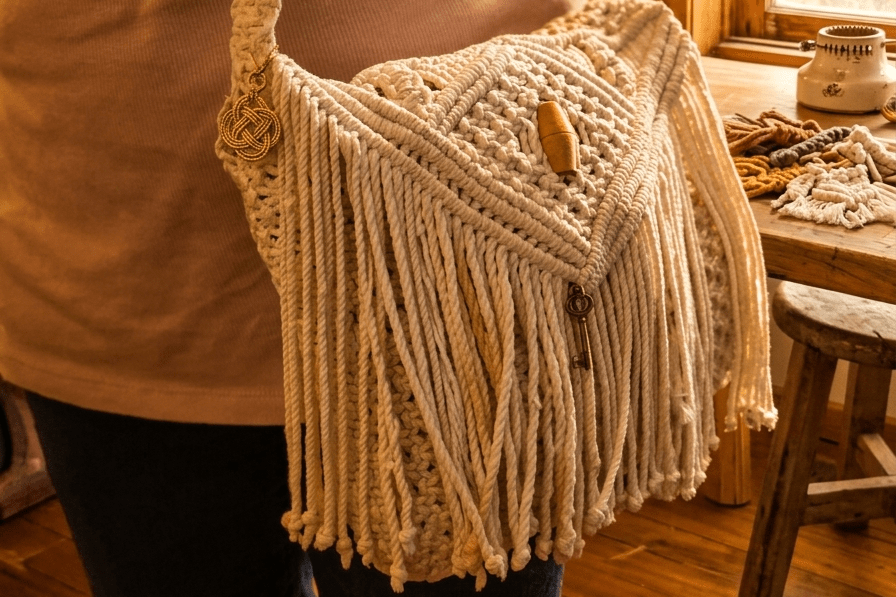
The bag used for header image was made and is still owned by Maureen Stevens.
Extracts and information to support the writing of this article was used from https://www.apartmenttherapy.com/brief-history-macrame-37059785
Discover more from GreyMatter.StudioLife
Subscribe to get the latest posts sent to your email.
