International Day of Older Persons 2026 put the idea on the table: as the world is changing because we are living longer, our thinking about ageing needs to change with it.
Note; the 2026 International Day of Older Persons (IDOP) centered on the theme “The Age of Longevity: Rethinking Systems for Longer Lives,” with global activity focused on adapting health, social, economic, and governance systems to support longer, healthier, and more dignified lives.
The GreyMatter campaign used the word “becoming” – because there is way too much revisiting-rethinking-returning-rewinding-recycling-repaying \ and we are no longer what we used to be \ we are the future.
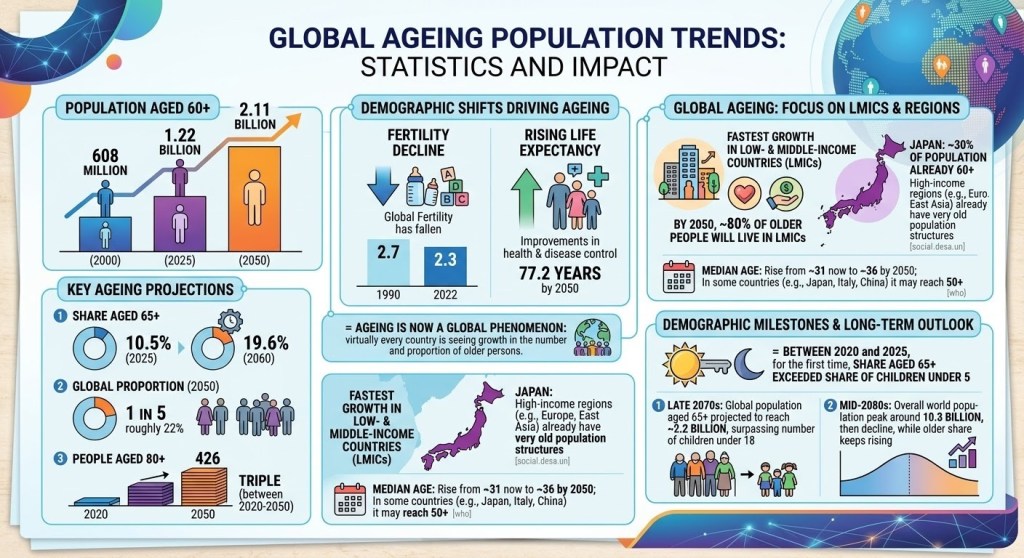
Globally, the number of people aged 60 and over has more than doubled since 2000 and is expected to reach more than two billion by 2050. For the first time in recorded history, people aged 65 and over now outnumber children under five.
Across global conversations, the focus was on healthier longevity, age-inclusive workplaces and economies, stronger communities, dignity and rights, and systems that recognise older people not as dependants, but as contributors.
For GreyMatter, there is another important question: who are we becoming?
Too much of the conversation around ageing still looks backwards; at who we were, what we used to do, or what we have lost.
But a longer life gives us something else: more time to learn, create, work, contribute, experiment, connect and change direction.
That might mean opening a sewing studio (Marylouise), writing a book (Michael Tellis), developing a film script (Melanie), volunteering in aged care (Olga), continuing professional work (Pete,Gerry,Glenn,etc), taking up a new hobby (Peter,Glenn,etc), discovering a new creative pursuit (Glenn,Melanie,etc) or simply finding a different way to add value to everyday life (Pete,Lisa,etc).
It is also about community.
As Rev Dr Lynn Arnold AO reminded us in his reflections on common ground to common good, our later years don’t exist in isolation. The idea of commonweal — our collective wellbeing — asks us to look beyond ‘them and us’ and consider what we can build together.
Longevity is therefore not simply a demographic shift. It is a cultural shift.
We are living longer. We are becoming different. And perhaps the real challenge is making sure our systems, communities and attitudes catch up with the people we are still becoming.
Age is not the whole story. It is simply part of it. And we’re not finished yet.
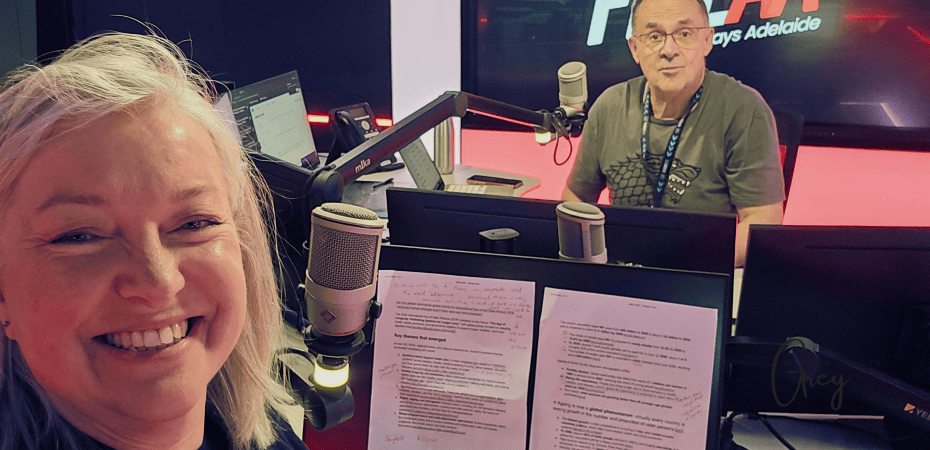
- Still Becoming on FIVEaa with Richard Pascoe | Monday 5 October
 Longevity is not simply a demographic shift. It is a cultural shift.
 - Still Becoming: Marylouise Turns a Love of Fabric into a New Creative Chapter
 Marylouise, one of GreyMatter.Studio’s recent International Day of the Older Person Still Becoming contributors, is pursuing her next chapter through taking fabric, thread and a brand-new retail venture. Fabric and Toile, her new fabric and sewing studio, is preparing to open its doors in Adelaide’s west, bringing together quality fabrics,… Read more: Still Becoming: Marylouise Turns a Love of Fabric into a New Creative Chapter
 - Still Becoming: Glenn Butcher
 To continue our stories, but in the spirit of Active Ageing Week, we thought we’d skip the usual questions and go straight to the music – the first gig, the creative journey, the Adelaide scene, inspiration, influences and what comes next; sometimes you simply pick up a guitar, write a song and see where it takes you.
 - Still Becoming: Gerry’s Story
 Gerry’s approach to life is refreshingly simple: work smarter, embrace change and make time for what matters.
 - Still Becoming: Olga’s Story
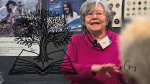 For Olga, meaningful work now means combining physical and mental contribution: continuing to support storytelling, while offering something useful to people living in aged care. “Some activities or purposes might close with age, but we can always find other new interests and purposes to immerse ourselves in, and new friends as well.”
Discover more from GreyMatter.StudioLife
Subscribe to get the latest posts sent to your email.
